

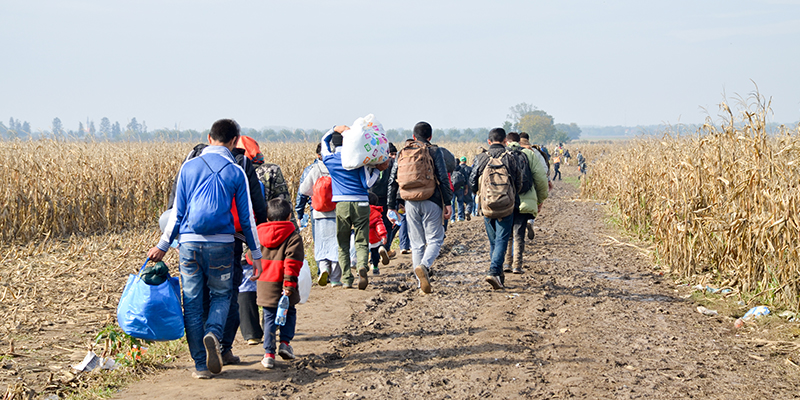
Let’s celebrate Refugee Week June 15-21, initiated in Australia 40 years ago and now observed worldwide. This year A Million Stories is the theme in Australia, recognising that we have issued one million permanent humanitarian visas since 1947. The Refugee Council of Australia has recorded the stories of many refugees highlighting their significant role in Australia. These amazing stories are worth looking at and can be found on their website.
For example, Marcus tells of his grandparents’ and parents’ escape from Vietnam in the 1980s and its impact on him as the child of two refugees. Shankar, a Sri Lankan Tamil talks about his parents’ decision to leave everything they knew to give their children a future. Emee, a Yazidi, escaped with her six daughters from Iraq in 2014 because ISIS were enslaving women and girls. Awut and Akol from South Sudan have five children. Their story of the importance of family ties is a potent reminder of the strength found within refugee families.
Diversity is a strength and an essential part of Australia’s heritage. According to SBS News figures from 2024 show that 31.5 per cent of Australians were born overseas and nearly half (48 per cent) had at least one parent born overseas. Refugees are part of this diversity. These newly arrived citizens have made significant contributions to building modern Australia.
RACS reports many people came to Australia to seek asylum because they were forced to flee brutal regimes. Instead of being welcomed, they have been sent to detention camps such as on Nauru where they saw things that no child or adult should ever have to witness.
Like all new arrivals. asylum seekers and refugees have hopes for the future – studying to pursue future dreams, having a career, paying taxes, finding stability, establishing families, involving themselves in their communities and making a positive contribution to Australia – but government policy makes this almost impossible forcing them to put their lives on hold.
Some, after more than a decade in Australia, don’t have permanent visas. Instead, every six months they are forced to reapply for visas, starting them back at ground zero. They face delays that can strip away access to basic services like Medicare and even the right to work. It’s not possible to build a future when everything you have can be taken away at the drop of a hat. Imagine if this applied to all Australians. How would you fare if this were your fate?
How did we get from the 1951 Refugee Convention that Australia signed to where we are today? This can be sheeted home to authoritarian governments. According to Amnesty International Australia, they quash those who speak the truth, exploit the law against dissent, concentrate power and undermine legal protections, crush opposition before it can organise and make scapegoats of vulnerable groups to spread fear and division.
When all else fails they corrupt the election process meant to hold leaders to account. The playbook is run with devastating effect in many countries. The more oppressive the country the greater the number of refugees. When the rest of the world looks away authoritarianism thrives.
How does Australia measure up? While Australia is recognised as a strong democracy, John Menadue writes that our human rights record has been seriously eroded. The UN, Amnesty International, Human Rights Watch and the Australian Human Rights Commission itself have documented systematic and worrying erosion of our human rights record across a wide front. Among these there has been sustained international condemnation of our immigration failures including mandatory and indefinite detention, offshore processing, and the documented cruelty of offshore facilities. While some Australian mothers, the so-called ISIS brides, and their children have been repatriated from the squalid camps in Syria. By not repatriating the other mothers and children from these camps we continue to deny the UN Convention on the Rights of the Child and the rights of mothers who are Australian citizens.
There are limited domestic legal remedies for individuals affected by the Commonwealth when it acts in ways that violate human rights – as it did with offshore processing, and indefinite detention. Those affected must rely on slow and often ineffectual political accountability and UN treaty body review as the only avenues available to them.
Immigration, and especially vulnerable groups of immigrants, has been weaponised by conservative Australians. The 2025 Australian Bureau of Statistics’ General Social Survey of residents aged 15+ from 13,302 households surveyed how participants felt about their lives and about others. The findings showed declines in many areas of Australian life, including trust and social inclusion. Participants indicated they were less trusting of each other than they were five years ago and had shifting attitudes towards cultural diversity. While multiculturalism is still accepted as good for society — with 75 per cent of people surveyed agreeing — there was a 10 per cent decline since the previous survey in 2020. Of those surveyed, 18 per cent experienced discrimination in the previous year with 46 per cent feeling that their ethnicity or culture or how they looked was the reason for their most recent experience.
The government says new measures in the 2026-27 budget will cut migration. Now migrants will be less likely to get a permanent visa, while older, lower-skilled and less educated migrants will have less chance under changes to Australia’s points system.
According to Bernard Keane, Opposition Leader Angus Taylor in his reply to the 2026-27 budget wants to create a binary Australia – one for citizens; one for non-citizens – with a blanket exclusion of permanent residents and humanitarian visa holders from 17 commonwealth benefits and payments including the NDIS, Jobseeker, Youth Allowance and the Family Tax Benefit. Approximately one in six residents are non-citizens. Taylor also plans to significantly reduce immigration numbers and lift immigration standards by preventing people from identified countries or regions from coming here – a return to White Australia.
When governments fail us, it is up to individuals to step up. Take Barbara, part of A Million Stories project, for example. She supports many Yazidi refugees living in her local area. She has become a mother for many, a mentor for others and been embraced as a family member by local families. From 2018, Barbara has worked tirelessly to assist people including twelve Yazidi girls rescued from the horrors of sex slavery.
We may not be able to do as much as Barbara but as a starting point we can reflect on Northern Rivers for Refugees’ vision – think globally, act locally – and contact politicians about Australia’s human rights shortcomings, challenge the status quo, lobby for a human rights act, continue to share stories, challenge stereotypes, and build a more inclusive society, and marvel at the success this community-based organisation has achieved.
